
Make every device worn on the ear understand the person wearing it.
Ondova develops an intelligent sensing platform, licensed through SDKs and reference designs. It lets your device recognize its wearer, follow heart rate, read wear state and taps, and supply the context that personalized audio and wellness features depend on.
Billions of devices already sit on the best continuous sensing site on the body, and almost none of them understand the person wearing them.
Adding that understanding today means adding dedicated sensors, and with them cost, power, board space and integration effort that most products cannot absorb. Wearer-awareness stays locked inside a handful of flagship products.
Ondova removes that barrier, starting at the ear: in-ear, on-ear and over-ear, from earbuds and headphones to communication headsets and hearing devices.
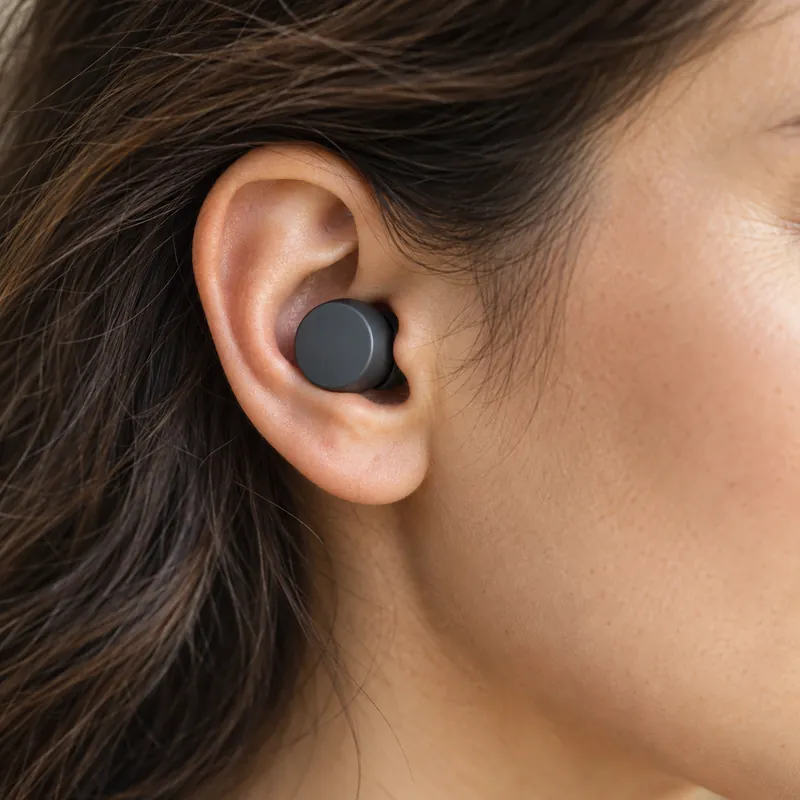
The speaker at your ear becomes the sensor.
Heart rate, touch and in-ear detection usually need their own parts. Here they come from the speaker already there.
No added sensors. Device makers license Ondova software and the design of a small circuit, and get new features from a part their product already has.
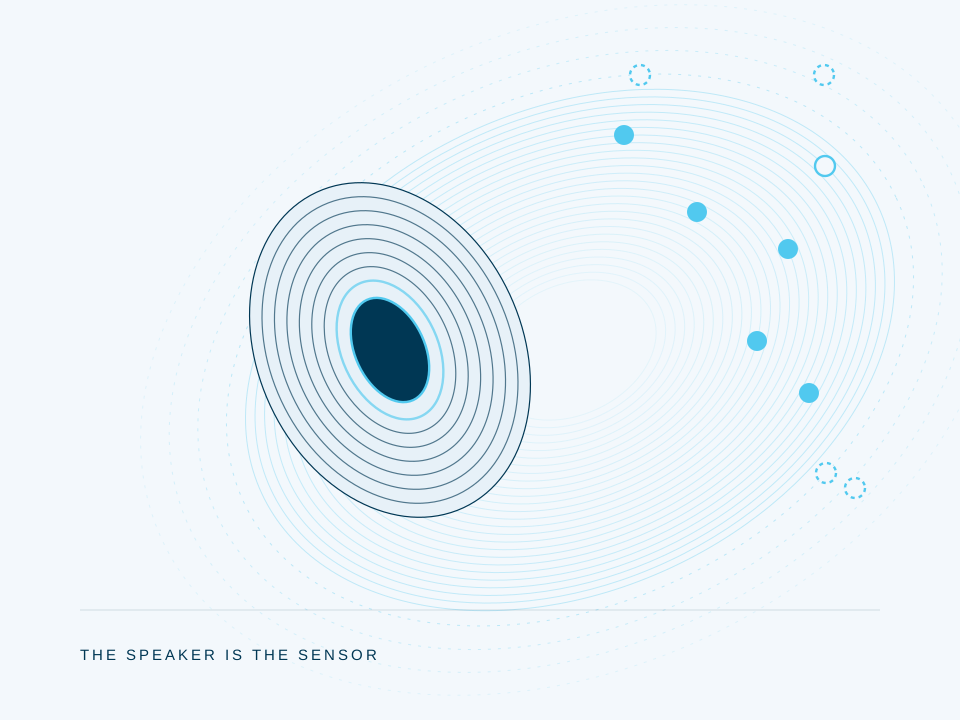
Every earbud and headphone has a speaker at the ear. The way that speaker responds changes slightly with the ear around it and with tiny movements, such as a heartbeat or a tap. Ondova reads those changes, even while music plays.
 This speaker is the sensorIt plays sound and feels the ear
A tapon the earbud
A heartbeatin the sealed ear canal
-
The speaker feels the ear
How it fits in the ear, a heartbeat, a tap: each one slightly changes how the speaker responds.
-
A small circuit reads it
It sits on the speaker's wires and separates that change from the music playing.
-
Software turns it into features
- Wearer identificationEach ear canal responds a little differently.
- Heart rate
- Wear detection
- Tap and gesture
- Fit and seal In validation
The speaker is already a precise transducer coupled to the ear.
A driver does not only push air. It responds to the ear it sits in, and to the body around it: its own electrical behaviour carries the load of the ear canal and the small movements of the tissue around it. Ondova reads that response through a compact analog front end placed in the driver path, so the speaker becomes the sensing element. Playback is cancelled in the analog domain, which is why sensing keeps running while music plays.
The result is a speaker-sensed, driver-derived signal carried over the audio interfaces your device already has. Nothing optical, capacitive or inertial is added to the bill of materials.
This adds a capability your device does not have today, and it works alongside the sensors you already ship.
- 1Driver in the earoutput device and sensing element
- 2Analog front endin the driver path, playback cancelled in the analog domain
- Standard audio interface
- 3Ondova SDKwearer identity, heart rate, wear state, taps
- Nothing optical, capacitive or inertial is added.
 No added sensors
 No dedicated sensor to power
 Housing and tuning stay yours
What the signal supports.
Every capability below comes from the same speaker-sensed path. New features arrive as software on the same front end, each one validated before we call it a capability.

Wearer identification
The device recognizes an enrolled wearer from the signature of that person's ear canal. Personalization, profiles and correct device assignment on shared or rotating headsets. Enrolment is opt-in and the wearer's signature stays within the product.

Heart rate
Heart rate read from the driver signal while music plays. Intended for general wellness and evaluated against a chest-strap reference.

Wear detection
Worn or removed, for auto-pause, auto-resume and power saving, without a dedicated presence sensor.

Tap and gesture
Button and touch behaviour with no capacitive touch hardware, useful where sealing, cost or industrial design rules a touch surface out.

Fit and seal
A fit test from the same signal, so the wearer can be told when the seal is wrong and the tuning is not being delivered.
Beyond the validated set
All wellness features are intended for general wellness. Ondova makes no medical or clinical claims. Performance figures are shared with evaluating partners under NDA, together with the test conditions behind them.
Three ways the platform reaches your product.

The estimation layer
It takes the speaker-sensed stream and returns wearer identity, heart rate, wear state and taps through a documented API per capability.
- Host implementation for PC and phone, used for evaluation and wired products
- Embedded targets discussed with partners under NDA
- Output as events and streams, so the product decides what it exposes
The analog front end
A documented per-side block for the driver path.
- Schematic and component guidance
- Documented effect on the driver load and on the amplifier
- Characterized once per headphone model during bring-up

Hardware to try it on
Reference hardware fitted with the Ondova front end, and a demo application, so your engineers can run the validated capabilities themselves.
- Live demo of wearer identification, heart rate, wear detection and tap
- Your own form factor where practical, characterized with you during the evaluation
- Findings report against targets we define together, with the protocol attached
The technology inside your product.
Ondova is an ingredient brand: we license the sensing intelligence to the companies that build the devices, and the product and the customer relationship stay yours. The analog front end ships as a reference design today and is built to be integrated into the hardware you already choose, including partner silicon.

A skeptical engineer should be able to reproduce it.
Our commercial case rests on the signal being real, so we treat validation as part of the product. Evaluating partners receive the protocol with every result, and we state the limits of our datasets. We welcome independent co-validation.
Request the validation packEvaluate it on your own terms.
A structured evaluation, typically six to eight weeks, on reference hardware fitted with the Ondova front end or, where practical, on your own form factor. We run a small number of evaluations per cycle so that each partner works directly with the engineers who built the signal path.
- An evaluation kit and a demo application covering the validated capabilities
- Weekly engineering syncs with our core team
- A findings report measured against targets we define together
What we ask for: a named technical owner, test units where applicable, and a mutual NDA.
Who this fits
Makers of earbuds, headphones, communication headsets and hearing devices with an active product cycle. Operators running shared or rotating headsets at scale, where knowing who is wearing a device, and whether it is being worn, changes how the operation runs.

Built in Montreal.
Ondova Technologies Inc. builds the sensing layer for ear-worn devices. Founded in Montreal through TandemLaunch, a deep-tech venture studio.


Working with us
Open roles at Ondova →Today the work is the ear, where the installed base is largest and our validation is furthest along. If a device can be made to understand its wearer through hardware it already has, that is Ondova's work.
Ondova does not make consumer products and makes no medical claims. Our work is the sensing layer, delivered through the partners who build the devices and the silicon.